

BlockchainSeptember 17, 2026 · By Jake Rivers
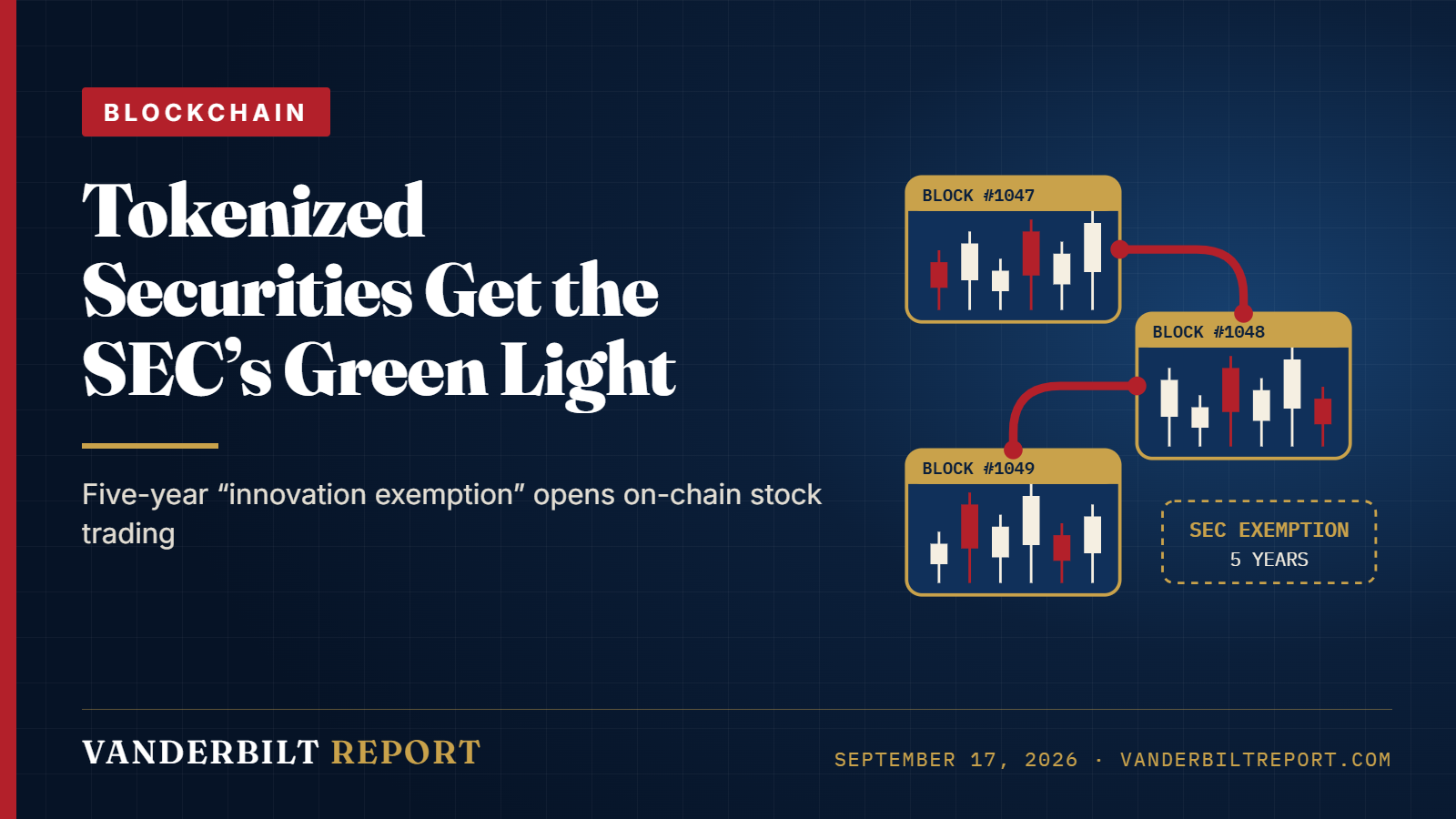
Welcome, and if you follow blockchain, today is one for the history books. The U.S. Securities and Exchange Commission has issued its long-awaited “innovation exemption,” a five-year framework that allows tokenized securities, starting with tokenized versions of U.S.-listed stocks, to trade on blockchain-based venues without those venues registering as traditional exchanges. Below is a clear guide to what changed, the guardrails attached and why it matters.
What the SEC decided on tokenized securities
According to the SEC’s press release, the order grants “Tokenized Securities Venues” (TSVs) a temporary exemption from the legal definition of an “exchange,” letting them trade tokenized National Market System (NMS) stock using permissioned automated market makers and liquidity pools. Liquidity providers using their own capital in those pools get a conditional exemption from the “dealer” definition. CoinDesk reports that venues need only give notice before operating; no formal SEC designation is required.
“The Securities and Exchange Commission is taking a significant step forward, within its statutory authority, to bring America’s capital markets into the digital age.”
— SEC Chair Paul Atkins, as quoted by CoinDesk
The guardrails
This is not a free-for-all. The exemption comes with conditions designed to keep tokenized securities tied to the real thing:
- Real shares only. Tokens must represent actual ownership of the underlying stock, with the same rights, including dividends and voting. Synthetic or derivative-style products, such as those offered offshore, are excluded.
- Issuer notice and objection. Venues must notify a company before its stock is tokenized by a third party (CoinDesk cites a 30-day notice period), and issuers can object.
- Transparent code. Smart contracts must be public, auditable and deployed on permissionless distributed ledgers.
- Synchronized halts. Trading in a token must stop whenever the underlying stock is halted.
- Size limits and disclosure. There are caps on the number of symbols and on trading volume, public reporting on operations, and sanctions compliance, according to the SEC and The Block.
Sources: SEC, CoinDesk, The Block, Axios.
Why it matters for markets
Supporters argue that tokenized securities can settle almost instantly, trade around the clock and lower costs. CNBC framed the move as bringing the market closer to 24/7 trading. Jamie Selway, director of the SEC’s Division of Trading and Markets, called the approval “an important milestone for the Commission’s work to open our capital markets for tokenized securities.” CFTC Chair Michael Selig said his agency is “locked in and ready to ship its rules for the new frontier of finance,” per The Block.
A bridge, not a destination
Atkins was candid that the exemption is temporary, describing it in his official statement as a bridge toward durable rulemaking. Commissioner Mark Uyeda issued a separate statement as well. With Congress stalled, the SEC is using its existing authority, which means a future commission could change course, and the public comment process may yet reshape the details.
What to watch
- Which platforms file notice first, and which public blockchains they choose.
- How listed companies respond to third-party tokenization of their shares, including how often they object.
- Where the SEC sets, and later adjusts, the symbol and volume caps.
- Whether Congress revisits market-structure legislation after the midterm elections.
The bottom line
For years, tokenized securities were a promising idea waiting for a legal home in the United States. They now have one, at least for the next five years. The rules are cautious and the limits are real, but the direction is unmistakable: regulated stock trading is moving on-chain. We will keep following this story as the first venues come online.
Sources
- SEC — SEC Issues “Innovation Exemption” to Facilitate the Trading of Tokenized NMS Stock and Request for Comment
- SEC — Chair Atkins: A Bridge Toward Durable Rulemaking
- SEC — Commissioner Uyeda: Statement on the Innovation Exemption
- CoinDesk — SEC rolls out ‘innovation exemption’ for tokenized securities trading venues
- The Block — SEC releases long-awaited innovation exemption
- CNBC — SEC clears path for tokenized stocks, bringing 24/7 trading closer
- Axios — Crypto’s Clarity Act fails to advance in Senate