



MARKET SCOPE DIGEST – Investor Outlook: Earnings, Energy, and the Next Two Weeks – October 27, 2026


The U.S. stock market enters the next two weeks with meaningful earnings support but limited room for disappointment. Corporate profit growth and an improvement in consumer confidence provide reasons for investors to remain engaged. At the same time, elevated energy costs, subdued hiring, and uncertainty surrounding Federal Reserve policy create conditions in which favorable market sentiment can change quickly. Market Scope Digest expects trading through November 10 to remain volatile, with opportunities concentrated in companies demonstrating financial strength and credible growth.
The market readings available during October 27 showed the S&P 500 at approximately 7,720.63, up 0.57%, while the Nasdaq Composite advanced 1.14% to 26,467.06. The Dow Jones Industrial Average was essentially unchanged. These were intraday readings rather than final closing prices. Although the major indexes showed resilience, the underlying picture was less uniform. On the Nasdaq, 202 stocks registered new 52-week lows compared with 48 reaching new highs. That imbalance suggests that gains in influential companies are masking weakness elsewhere. A more durable advance would require participation to broaden beyond the stocks currently carrying the indexes.
Corporate earnings remain the strongest argument supporting equity prices. FactSet’s October 23 assessment placed blended third-quarter S&P 500 earnings growth at 29.5%, accompanied by revenue growth of 12.7%. Those figures combine actual results from companies that have reported with estimates for those still to come. The index’s forward price-to-earnings ratio stood at 18.7, below its ten-year average of 19.1. However, the proportion of companies exceeding revenue expectations was slightly below its historical average. Together, these measures suggest that the market has substantial earnings support, while also underscoring the importance of whether companies can maintain their growth projections.
Investors should therefore place considerable weight on management guidance during the remainder of earnings season. A reasonable valuation depends on the earnings used to calculate it. If those estimates weaken, an apparently inexpensive stock can become considerably less attractive without any change in its share price. Revenue growth, operating margins, cash generation, and financing requirements deserve attention alongside reported earnings per share. Businesses that can maintain demand and fund expansion internally are better positioned to withstand a period of expensive capital.
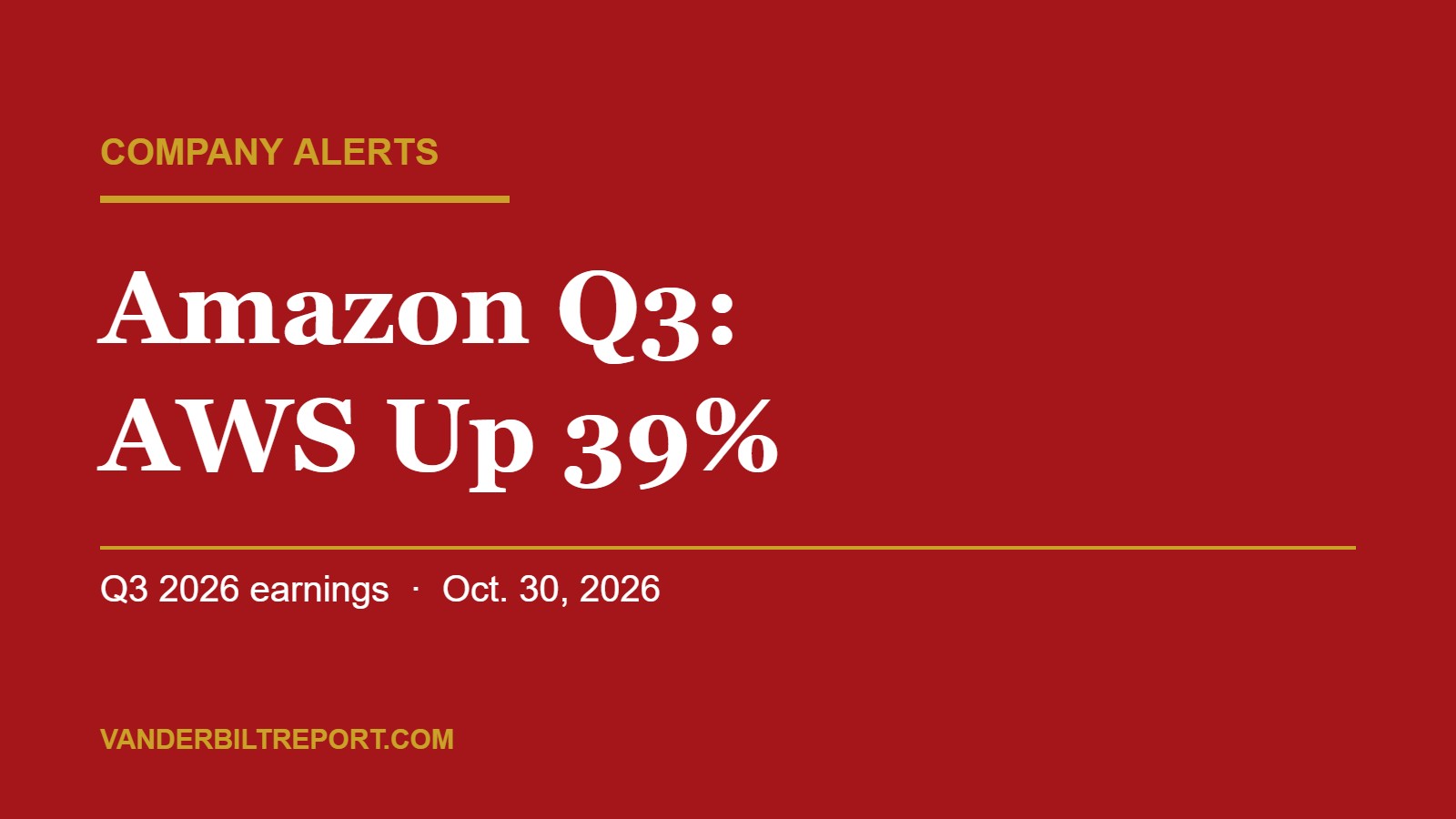
Microsoft and Alphabet are scheduled to report on October 28, followed by Amazon on October 29. These announcements will provide an important test of the technology sector’s investment case. Investors will be looking for evidence that artificial intelligence and cloud infrastructure spending are producing measurable commercial returns. Strong demand accompanied by improving cash generation could support both the major platforms and their equipment suppliers. Conversely, rising investment requirements without comparable progress in revenue or profitability could renew concerns about the financial sustainability of the expansion.
Inflation continues to complicate the broader outlook. September consumer prices increased 0.6% during the month and 3.7% from a year earlier. Excluding food and energy, prices rose 0.3% monthly and 2.6% annually. Energy prices increased 5.2% during September, illustrating the direct connection between geopolitical instability and domestic inflation. Although energy accounts for a significant portion of the pressure, underlying monthly price increases remain sufficiently persistent to keep monetary policymakers cautious.
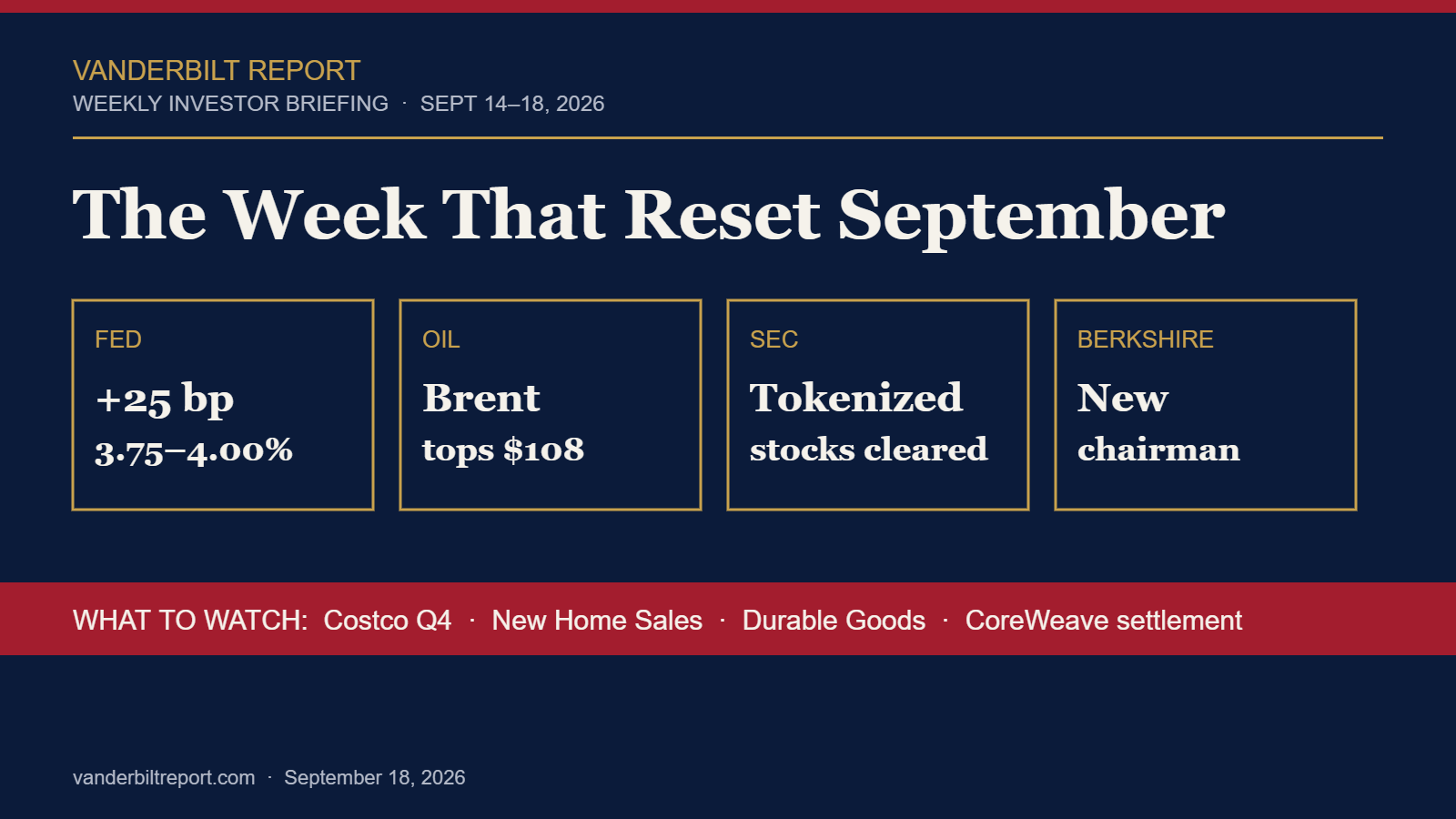
The Federal Reserve’s October 28 decision will consequently be evaluated through its implications for future policy. The central bank raised its target range to 3.75%–4.00% in September, and the minutes of that meeting indicated that most participants considered another increase appropriate before year-end. Leaving rates unchanged in October would not necessarily signal an end to tightening. Investors will examine how officials describe inflation, economic resilience, and the conditions that could justify another increase. A more restrictive message could pressure valuations even if the immediate rate decision meets expectations.
The bond market reinforces that concern. The ten-year Treasury yield was approximately 4.98% in October 27 reporting, maintaining substantial financing pressure on businesses and households. Higher yields also give investors an alternative to equities, increasing the standard that stocks must meet to justify their risk. A gradual decline in yields alongside stable economic activity would improve the investment environment. A decline driven by deteriorating growth or credit conditions would carry a different message and should not automatically be interpreted as favorable for stocks.
Employment data show why the economy cannot be judged solely through corporate earnings. September payrolls increased by only 29,000, while unemployment stood at 4.2%. Revisions reduced the combined July and August payroll estimates by 60,000, and July’s revised employment change was negative. These figures do not independently establish that the economy is in recession, but they indicate limited hiring momentum. Another weak employment report would increase concern that households and businesses have little protection against an additional rise in energy costs or borrowing expenses.
Today’s consumer-confidence report offered some encouragement. The Conference Board’s index increased to 91.7 in October from 84.2 in September, while its expectations component improved to 72.6. Nevertheless, consumers indicated weaker spending intentions for services and durable goods. The survey concluded October 21, meaning it does not fully reflect subsequent developments. Our assessment is that sentiment has improved without establishing a decisive recovery in household purchasing power. Consumer-facing companies will still need to demonstrate that sales are supported by sustainable demand rather than price increases alone.
The most consequential geopolitical developments continue to involve the Middle East and its energy infrastructure. Officials from Saudi Arabia, Turkey, and Pakistan met Iranian officials in Tehran on October 26 to pursue de-escalation. The negotiations provided grounds for cautious optimism, but the reporting reviewed did not establish a comprehensive settlement. During October 27 trading, Brent crude was approximately $113.72 per barrel and U.S. crude approximately $99.83. Both had declined in the cited market update, but those prices remained substantial costs for the global economy.
Military developments demonstrate why diplomatic progress should not yet be treated as lasting supply relief. The Saudi-led coalition reported intercepting missiles and drones on October 27. Separately, the Houthis claimed an attack on Ras Tanura, while Saudi confirmation of that claimed strike was absent from the reporting reviewed. Investors should distinguish these claims from verified refinery shutdowns or export losses. The market consequences depend on actual damage, operational interruptions, and the ability to move energy supplies safely.
A sustained reduction in oil prices would benefit transportation companies, consumer spending, and businesses facing pressure on their operating margins. Renewed disruption would have the opposite effect, increasing costs while limiting the Federal Reserve’s flexibility to respond to weaker growth. This is the central economic danger posed by the conflict: an energy shock can simultaneously restrain demand and sustain inflation. A temporary decline in crude following diplomatic announcements is constructive, but the stronger signal would be an extended period of improving shipping access and reliable deliveries.
Israel’s October 27 election introduces another source of uncertainty. The information available for this assessment did not establish a completed outcome, and coalition formation can extend well beyond election day. A political change would not automatically produce a change in military policy. Investors should evaluate actual negotiating commitments and operational developments rather than assume that an election result resolves the regional conflict.
Russia and Ukraine remain important to the fuel outlook as well. Preliminary expectations reported October 27 indicated that Russian crude shipments through western ports could decline by approximately 100,000 to 200,000 barrels per day in November as domestic refineries process more oil, including for diesel exports. Continuing attacks make those plans uncertain. Additional refined fuel production does not necessarily translate into additional crude exports, and the distinction matters for assessing which parts of the energy market might experience relief.
The November 1 OPEC+ meeting will provide another opportunity to assess supply conditions. Reporting indicated that participating producers were expected to maintain December output targets, although a final decision had not been announced. Production targets alone will not resolve the market’s concerns. Actual output, export capacity, and safe transportation will determine whether sufficient supplies reach buyers. Investors should be cautious about interpreting a quota announcement as equivalent to an immediate improvement in physical availability.
Outside the conflict zones, China’s latest industrial figures showed continued but uneven expansion. September industrial profits increased 14.4% from a year earlier, with considerable differences between technology-related activity and weaker traditional industries. This supports the view that global growth remains concentrated in particular areas. Companies serving demonstrated demand may continue to perform well even while broader industrial or consumer conditions remain uncertain.
The U.S. midterm election on November 3 adds another major event within the forecast period. Its outcome could influence expectations for taxation, federal spending, regulation, and legislative oversight. However, political expectations should not be confused with immediate changes in corporate profitability. A clear result may reduce uncertainty, while close or disputed outcomes could extend it. Neither outcome would automatically remove the pressures created by inflation, energy costs, and high borrowing rates.
The economic calendar is equally significant. Following the October 28 Federal Reserve decision, third-quarter GDP and September personal income, spending, and PCE inflation are scheduled for October 29. September job openings follow on November 3, the October employment report on November 6, and October consumer inflation on November 10. This sequence means that investors may have to reassess their expectations several times within a short period. A favorable reaction to earnings or election results could be reversed by an unexpectedly strong inflation reading at the end of the forecast window.
Market Scope Digest’s base case is a volatile market that finishes near current levels to moderately higher by November 10. An S&P 500 outcome ranging from approximately 2% below to 3% above the October 27 reference level is a reasonable working scenario if earnings remain supportive, monetary policy avoids a more restrictive surprise, and energy disruptions do not intensify. This is an analytical judgment rather than a statistically calculated forecast, and it does not imply that market fluctuations will remain within those boundaries throughout the period.
A stronger advance would require several developments to reinforce one another. Convincing technology guidance, sustained relief in oil prices, softer underlying inflation, and broader participation could support an increase of approximately 4% to 6%. The adverse scenario would involve renewed energy disruption combined with disappointing earnings guidance or a more restrictive interest-rate outlook. Under that combination, a decline of approximately 5% to 8% would be plausible, with larger losses possible among speculative companies. These scenarios illustrate the range of conditions investors should prepare for rather than exhaust every possible outcome.
Our preference in this environment is for profitable businesses with strong balance sheets, identifiable demand, and sufficient cash generation to fund their plans. Selected technology and infrastructure companies may meet those standards, but association with a popular investment theme is not enough. Energy producers could offer some protection against supply disruptions, although they may underperform if diplomacy produces a sustained decline in crude prices. Consumer and transportation businesses could benefit from lower fuel expenses, provided demand remains adequate.
Small-company stocks require particular selectivity. Improving sentiment and falling yields could produce sharp rebounds, but companies dependent on refinancing or new share issuance remain vulnerable. A low share price or small public float does not establish financial strength. Over the next two weeks, liquidity, financing requirements, and the timing of company announcements may be as important as the direction of the major indexes.
Precious metals also face competing influences. Gold traded around $4,000 per ounce in October 27 reporting while the dollar strengthened. Geopolitical stress can support demand for gold, but higher interest-rate expectations can offset that benefit. Easing yields and a softer dollar would provide more persuasive evidence of improving conditions for precious metals, while silver would also benefit from stronger industrial demand.
Investors can remain engaged while preserving the flexibility to respond to new information. Gradual entries around major announcements reduce dependence on a single outcome, although overnight price gaps can still bypass planned exit levels. The strongest justification for increasing exposure would be improving agreement among corporate earnings, inflation, energy prices, and market participation. Until that confirmation develops, financial quality and disciplined position sizing deserve priority.
Market Scope Digest provides this outlook for informational and educational purposes. It is not personalized investment advice. Projections are conditional, may change as new information becomes available, and do not guarantee investment results.