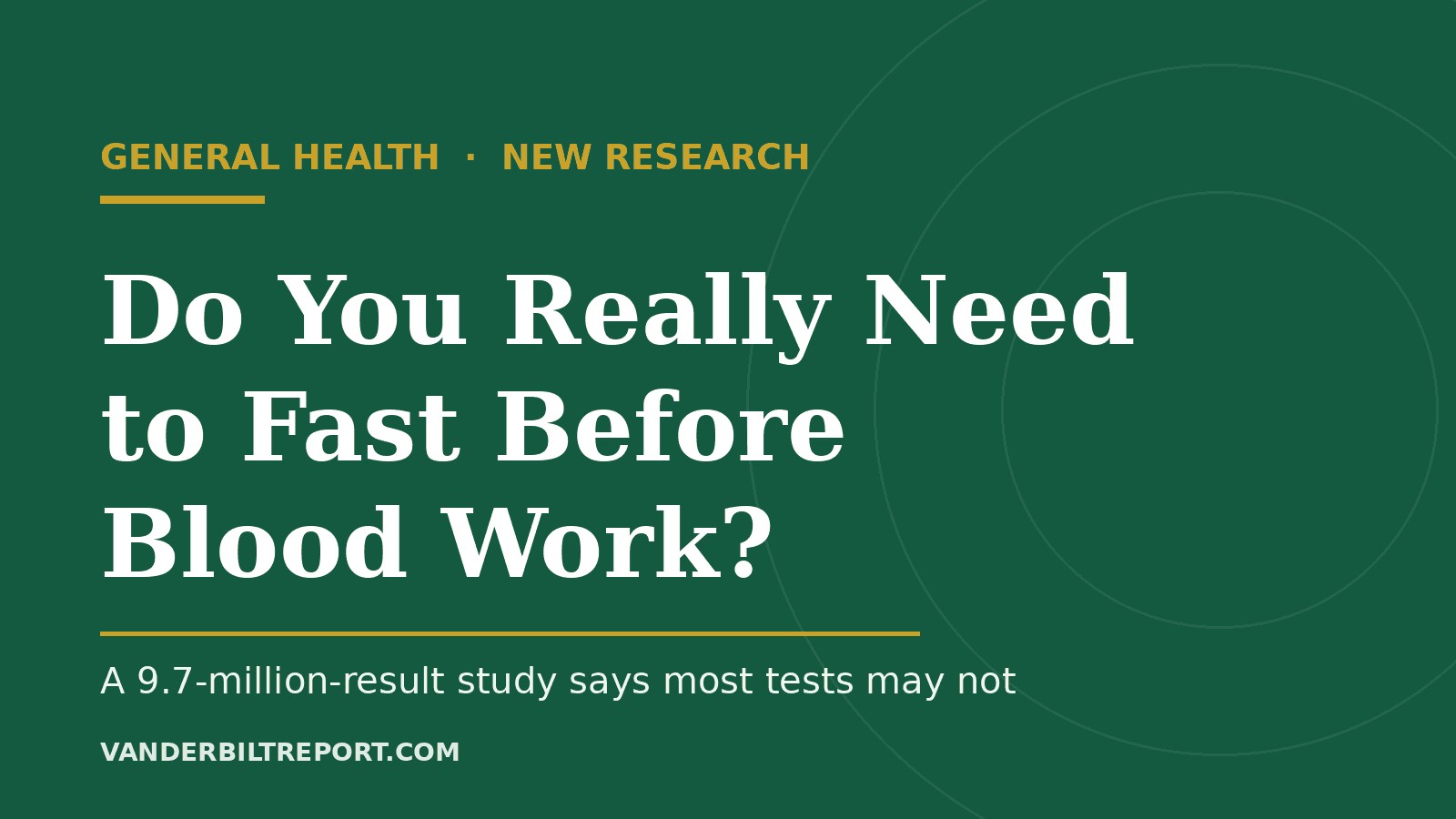



If you have ever skipped breakfast and sat hungry in a lab waiting room, a new study may interest you. Research published September 28, 2026, in JAMA Internal Medicine suggests that fasting before a blood test makes little measurable difference for most routine lab results — though it still matters for a handful of important tests, including blood sugar and triglycerides.
The study, led by Sunghwan Shin and colleagues in the Department of Laboratory Medicine at Asan Medical Center (University of Ulsan College of Medicine) in Seoul, South Korea, analyzed more than 9.7 million test results from about 101,000 adult outpatients. Here is what the researchers found, how strong the evidence is, and what it means — and does not mean — for your next appointment.
What the Study Looked At
- Design: A retrospective, cross-sectional analysis of existing hospital lab records — not a randomized trial.
- Scale: 9,755,547 test results from 101,148 adults, collected February 2021 through December 2023 at a single 670-bed university hospital.
- Comparison: Results were grouped by how long patients reported fasting: under 8 hours, 8–12 hours, and more than 12 hours.
- Yardstick: Differences were judged against established limits for acceptable laboratory variation, according to a summary in Medical Dialogues.
Key Findings on Fasting Before a Blood Test
Across the tests studied, 27 showed differences beyond acceptable limits when comparing groups, but only 10 held up when researchers compared results within the same people, per published summaries. The clearest effects appeared in a small group of tests when patients had fasted less than 8 hours:
| Test | What it measures | Difference with <8 hours fasting (vs. longer) |
|---|---|---|
| Triglycerides | Blood fats | About 20.1% higher |
| Glucose | Blood sugar | About 10.8% higher |
| GGT (gamma-glutamyl transferase) | A liver enzyme | About 14.8% higher |
| Lipase | A pancreatic enzyme | About 36.4% higher |
Figures as reported in study summaries by Medical Dialogues. Some summaries also report lower bilirubin and vitamin D values with shorter fasts.
Two other findings stand out:
- No meaningful difference between 8–12 hours and more than 12 hours of fasting. In other words, going beyond 12 hours added no analytical benefit.
- Most other routine tests appeared largely unaffected by shorter fasting times.
The authors concluded that labs should move toward test-specific fasting instructions rather than a one-size-fits-all rule. An accompanying JAMA Internal Medicine commentary is titled “Time to Stop Fasting Before Blood Sampling.”
How Strong Is the Evidence?
The study is very large, which makes its averages precise. But size does not fix every limitation. According to the authors’ own caveats, as summarized by Medical Dialogues:
- It was retrospective and single-center, so results may not apply everywhere.
- Fasting times were self-reported and not verified.
- Researchers did not know what patients ate — a large meal and a black coffee are very different.
- The population skewed older, which may limit how well findings apply to younger adults.
- It did not test whether the differences would change a diagnosis or treatment decision.
- Time of day, medications and illness could also have influenced results.
Analysis: The findings fit a broader shift already under way for cholesterol testing. A 2016 joint consensus statement from European atherosclerosis and laboratory-medicine societies (European Heart Journal) and the 2018 AHA/ACC cholesterol guideline (Circulation) both accept nonfasting lipid testing for many patients. The new study extends the question to a much wider range of routine tests.
Practical Takeaways for Readers
- Follow your clinician’s or lab’s instructions. This study does not change any individual’s orders. If you were told to fast, fast — or call and ask whether it is still necessary.
- Ask which tests you are having. Fasting appears most relevant for glucose and triglyceride measurements, which are often used to screen for diabetes and assess heart risk.
- Longer is not better. The study found no added benefit to fasting beyond 12 hours.
- Note the details. Telling the lab when you last ate helps clinicians interpret your results.
- Be careful with medications. People who take diabetes medicines or other drugs that interact with meals should never change eating or dosing routines without guidance from a healthcare professional.
The Bottom Line
For many routine blood tests, strict overnight fasting may be more habit than necessity, according to this large study. But fasting still appears to matter for a few key measurements, and the research has important limitations. Anyone with questions about preparing for blood work should consult their doctor, nurse or laboratory.
Related Coverage on Vanderbiltreport.com
- Health and Medicine News This Week: Breakthroughs You Should Know
- FDA Panel Backs GRAIL’s Galleri Multi-Cancer Early Detection Test
- More General Health news
Sources
- JAMA Internal Medicine: Fasting Duration and Differences Across Routine Laboratory Tests
- JAMA Internal Medicine commentary: Time to Stop Fasting Before Blood Sampling
- Medical Dialogues study summary
- KFF Health News Morning Briefing, Sept. 29, 2026
- EAS/EFLM consensus on nonfasting lipid testing (2016)
- 2018 AHA/ACC Guideline on the Management of Blood Cholesterol
This article is for general information only and is not medical advice. Always consult a qualified healthcare professional about your own testing and care.
Publisher Disclaimer: Vanderbiltreport.com publishes news and information for general informational and educational purposes. Information is compiled from sources believed to be reliable, but Vanderbiltreport.com does not guarantee the accuracy, completeness, or timeliness of all information presented. Readers should independently verify information and conduct their own research before making financial, investment, business, or other decisions.