


Medicare’s 2.48% Boost: Who Really Wins?

We just witnessed one of the most dramatic policy reversals in health care financing history.
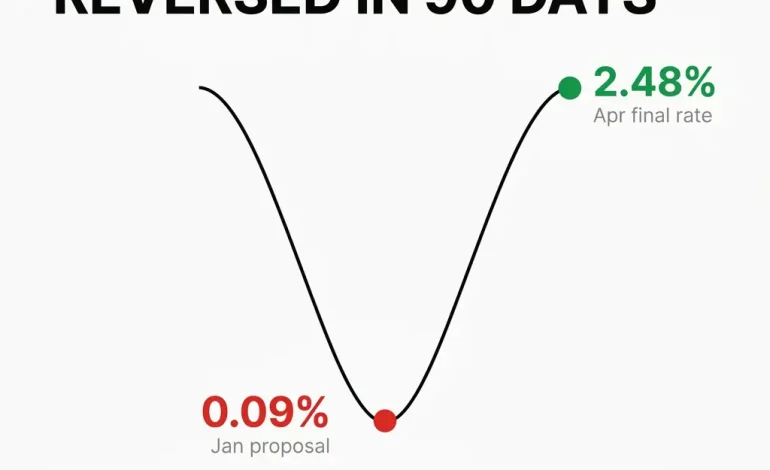
On April 9, 2026, the Centers for Medicare & Medicaid Services finalized a 2.48% net average rate increase for Medicare Advantage plans for 2027. This represents a stunning pivot from January’s proposed 0.09% hike that sent health insurers into free fall.
The market response was immediate and massive. UnitedHealth Group jumped 10% in a single day. Humana surged 11%. CVS Health gained 6.9%. The managed care index posted its largest single-day gain in over two years.
But here’s what we’re digging into: who actually benefits from this $13 billion injection into the Medicare Advantage program, and what does this tell us about the power dynamics shaping American health care?
The $100 Billion Wipeout That Changed Everything
When the Trump administration floated its January proposal to hold payment rates essentially flat, the selloff in health insurers wiped out nearly $100 billion in stock market value.
That wasn’t just investor panic. It was a calculated response to a genuine threat to business models built on predictable government reimbursement.
The final rate came in almost 2.4 percentage points higher than the proposed rule. That’s not a minor adjustment. That’s a complete reversal following what industry insiders describe as an intense three-month lobbying campaign.
Over those three months, insurers and Medicare Advantage groups funded research, launched advertisements, collected signatures, met with government officials, and submitted hundreds of comments to CMS pushing for higher rates.
Those efforts worked.
The Numbers Behind the Relief Rally
More than 33 million seniors are enrolled in private Medicare plans. That’s over half of all Medicare beneficiaries.
For the nation’s largest private insurers, this 2.48% increase provides necessary capital to offset soaring medical cost inflation and maintain competitive benefit packages. The alternative would have been benefit cuts, higher premiums, or market exits in unprofitable regions.
But there’s a tension here that doesn’t go away with higher rates.
The Medicare Payment Advisory Commission estimates that payments to Medicare Advantage plans are 14% higher ($76 billion) than spending for similar beneficiaries in traditional Medicare. While this gap has narrowed due to recent risk adjustment model changes, higher payments are expected to persist without further structural revisions.
Translation: taxpayers are paying a premium for private administration of Medicare benefits, and that premium just got bigger.
Gilead’s $5 Billion Bet Signals Broader Sector Confidence
The same week that Medicare rates got finalized, Gilead Sciences announced its acquisition of German biotech firm Tubulis for up to $5 billion.
This marks Gilead’s third major acquisition in 2026 alone. Earlier this year, the company acquired Arcellx for $7.8 billion and Ouro Medicines for $2.2 billion.
What’s driving this acquisition spree? Antibody-drug conjugates (ADCs), which industry insiders are calling “guided missiles” for cancer treatment.
Tubulis’ lead asset, TUB-040, showed a confirmed 50% overall response rate in clinical data, demonstrating best-in-class potential in one of oncology’s most competitive spaces. Daiichi Sankyo, AstraZeneca, and Pfizer are all investing heavily in next-generation conjugation technologies.
Gilead’s aggressive M&A strategy signals a deliberate shift toward higher-growth therapeutic areas, and it’s happening against a backdrop of strong sector fundamentals.
What the Data Tells Us About Health Care’s Momentum
In Q3, the U.S. health care sector saw the second-highest year-on-year revenue growth within the S&P 500, trailing only tech.
Health care’s 10.4% revenue growth exceeded the 8.0% expectation, resulting in the largest revenue surprise of any sector last quarter.
Yet the global health care sector trades at a historic discount to global equities of -2.4x. That disconnect between performance and valuation creates opportunities for investors willing to look past regulatory uncertainty.
The Medicare rate reversal removes one major source of that uncertainty. But it also exposes the ongoing challenge of balancing fiscal responsibility with industry profitability in a program serving millions of seniors.
The Real Winners and Losers
Insurers clearly won this round. The 2.48% increase protects margins and allows continued investment in member benefits and network expansion.
Seniors enrolled in Medicare Advantage plans benefit indirectly through maintained benefits and network stability.
But taxpayers are funding higher payments to private insurers that already receive premiums above traditional Medicare spending levels.
We’re watching a system where industry lobbying successfully reversed a proposed policy change that would have compressed insurer margins. That’s how the game works, but it raises questions about who holds leverage when government programs depend on private sector participation.
The health care sector is showing real momentum. Revenue growth is strong. Innovation in oncology is accelerating. Market valuations remain attractive relative to fundamentals.
But the Medicare Advantage rate reversal reminds us that regulatory risk remains a defining feature of health care investing. The $100 billion wipeout in January wasn’t theoretical. It was real capital destruction that reversed only after sustained industry pressure.
Understanding who wins when policy shifts is essential for anyone tracking this sector. Right now, the insurers are winning. The question is how long that lasts before the next proposal lands.