

Investor Outlook — Monday, October 5, 2026 (pre-market, Eastern Time)
U.S. stock futures were little changed early Monday as the 10-year Treasury yield held near 5.3%, a level the benchmark had not seen since 2002 until last week. Friday’s September jobs report showed hiring nearly stalled, yet bond yields barely eased — a combination that puts this week’s services-sector data, the Federal Reserve’s meeting minutes and a pair of long-dated Treasury auctions at the center of the market’s attention.
This outlook focuses on one question: can equities keep climbing while long-term borrowing costs sit above 5%? Below are the verified numbers, the scheduled catalysts and the risks investors are weighing.
Where Markets Stand Before the Open
As of roughly 5:00 a.m. ET, according to Yahoo Finance market data:
| Market | Level | Change |
|---|---|---|
| S&P 500 futures | 7,771.75 | −0.07% |
| Dow Jones futures | 51,470.00 | −0.01% |
| Nasdaq-100 futures | 31,036.50 | −0.08% |
| Russell 2000 futures | 2,851.30 | +0.01% |
| 10-year Treasury yield | 5.28% | +4 basis points |
| WTI crude (Nov.) | $90.11/bbl | −1.1% |
| Gold | $4,195.80/oz | +0.8% |
| Bitcoin | $86,158 | +1.1% |
| VIX | 16.38 | +1.07 pts |
Pre-market figures move quickly and will change after the open.
Stocks enter the week with momentum. On Friday the Nasdaq Composite rose 1.19%, the S&P 500 gained 0.73% and the Dow added 0.49% (Yahoo Finance). Edward Jones noted the S&P 500 is up about 13% year to date and roughly 1.5% below its all-time high, while small-cap stocks fell about 5% in September.
The 10-Year Treasury Yield: Why 5% Matters
On October 1, the 10-year Treasury yield climbed as high as 5.33%, surpassing its 2007 peak and reaching its highest level since 2002, with the 30-year yield also at a 24-year high, Bloomberg reported. Bloomberg’s reporting attributed the move to several forces at once:
- Persistent inflation pressure and expectations for further Fed tightening — overnight-indexed swaps had fully priced another Fed hike by year-end, according to the report.
- Heavy government borrowing globally.
- Higher oil prices tied to the Middle East conflict.
- Strong demand for capital from artificial-intelligence infrastructure spending.
Higher long-term yields matter for stocks in two ways. They raise borrowing costs for companies and households — mortgage rates are near three-year highs — and they increase the return investors can earn on lower-risk bonds, which can weigh on equity valuations, particularly for long-duration growth stocks.
The Fed backdrop
The Federal Reserve raised the federal funds target range by a quarter point to 3.75%–4.00% on September 16 in a unanimous vote, its first increase in three years. The statement said that “economic activity is expanding at a solid pace” while inflation remains elevated. (See our earlier coverage: Fed Rate Hike: What the First Increase in Three Years Means for Your Money.)
Friday’s Jobs Report: Soft Hiring, Sticky Yields
The Bureau of Labor Statistics reported on October 2 that the economy added just 29,000 jobs in September. Key figures:
- Payrolls: +29,000 (Edward Jones cited expectations near 90,000).
- Unemployment rate: 4.2%, within the 4.1%–4.3% range it has held since March.
- Average hourly earnings: +0.1% for the month, +3.0% from a year earlier.
- Revisions: July and August combined were revised down by 60,000; July now shows a loss of 10,000 jobs.
Analysis: A soft jobs number would normally pull yields lower by raising the odds of easier Fed policy. That yields stayed near 24-year highs suggests the bond market is focused more on inflation, supply and global rates than on the labor market — which makes this week’s inflation-sensitive data and auctions more important than usual.
Today’s Catalyst: ISM Services
The Institute for Supply Management releases its September Services PMI at 10:00 a.m. ET today, alongside S&P Global’s final services and composite PMIs. The services sector is the largest part of the U.S. economy, and August’s report was striking. According to ISM:
- Services PMI: 55.4% (up 1.3 points)
- Prices Index: 72.6% — the highest since October 2022
- New Orders Index: 60.9% — highest since February 2023
- Employment Index: 47.8% — still in contraction
What to watch: the Prices Index. Another reading in the 70s would reinforce the inflation concern behind higher yields. A cooler prices reading alongside steady activity would be the combination most likely to ease pressure on bonds. A weak employment index would echo Friday’s payroll report.
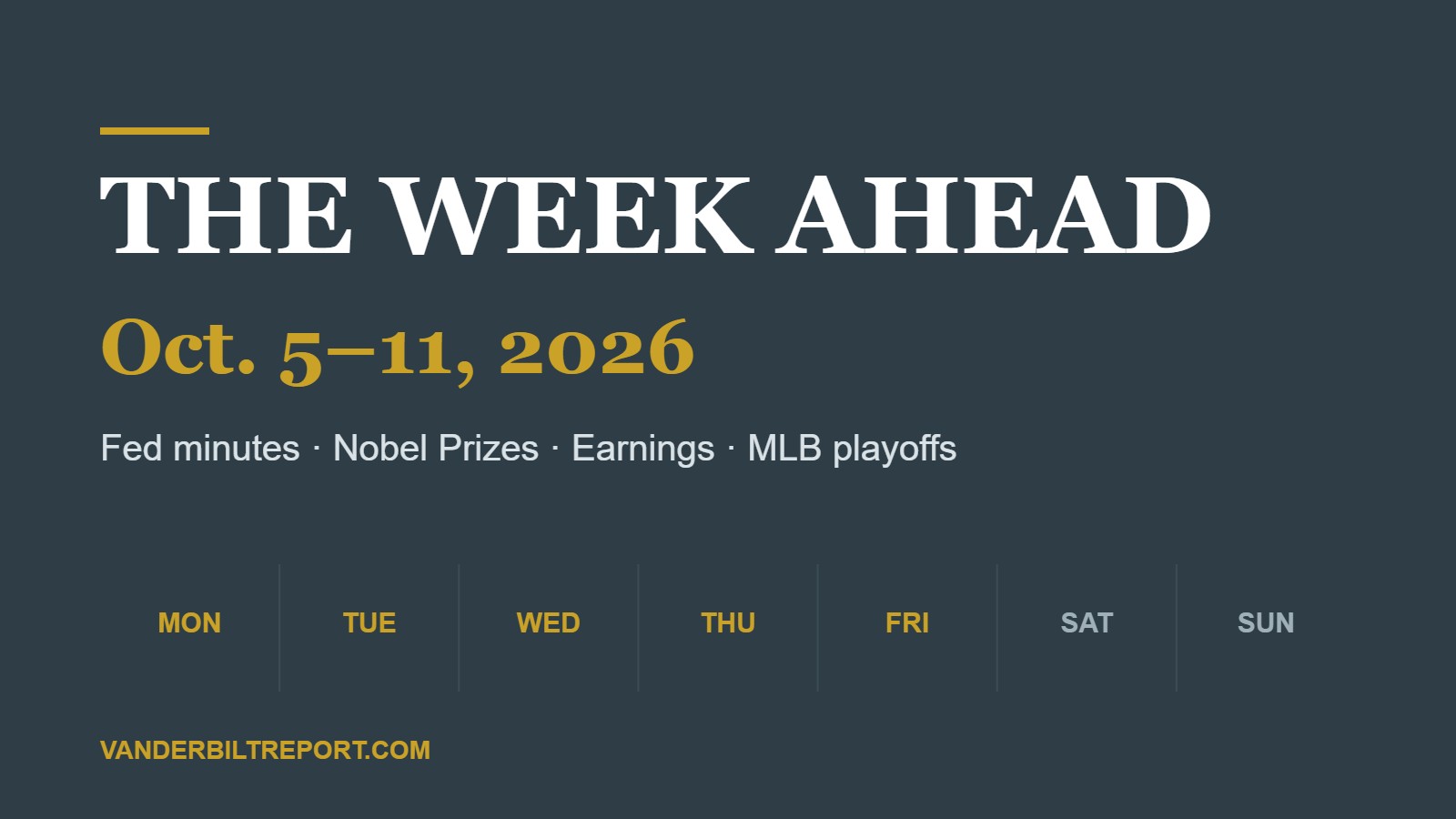
The Rest of the Week’s Calendar
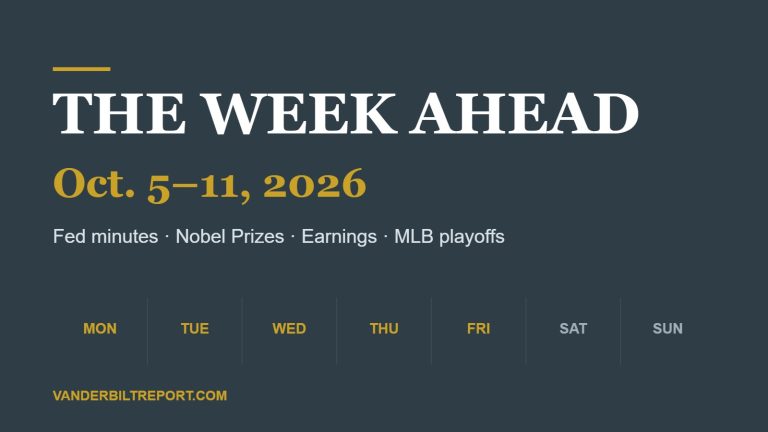
| Day | Event |
|---|---|
| Mon., Oct. 5 | ISM Services PMI; S&P Global services/composite PMI |
| Tue., Oct. 6 | U.S. trade balance; Constellation Brands (NYSE: STZ) earnings after the close |
| Wed., Oct. 7 | FOMC minutes from Sept. 15–16 meeting (2:00 p.m. ET); 10-year Treasury auction; Levi Strauss (NYSE: LEVI) earnings after the close |
| Thu., Oct. 8 | Weekly jobless claims; 30-year Treasury auction; PepsiCo (NASDAQ: PEP) earnings before the open |
| Fri., Oct. 9 | University of Michigan consumer sentiment; Delta Air Lines (NYSE: DAL) earnings before the open |
Schedule as compiled in our Week Ahead (Oct. 5–11, 2026); Applied Digital (NASDAQ: APLD) is also due to report this week, per Yahoo Finance. Times are subject to change by the issuers.
Why the auctions matter
With yields this high, demand at Wednesday’s 10-year and Thursday’s 30-year auctions is a direct read on investor appetite for long-term U.S. debt. Weak demand typically pushes yields higher; strong demand can pull them back. The Fed minutes, meanwhile, will show how many officials saw more increases ahead after September’s hike.
Commodities: Oil Eases, Gold Firms
WTI crude slipped about 1% to near $90 a barrel early Monday, while Brent remains above $100, according to Yahoo Finance. Oil fell roughly 1.5% on Friday after G7 nations announced plans to release up to 100 million barrels of emergency stocks, Edward Jones reported. Energy prices feed directly into the inflation data that bond investors are watching. Gold rose 0.8% to about $4,196 an ounce.
Sector Watch
- Technology: The Nasdaq led Friday’s gains and closed near a record (Edward Jones). Rate-sensitive megacaps are most exposed if yields push higher.
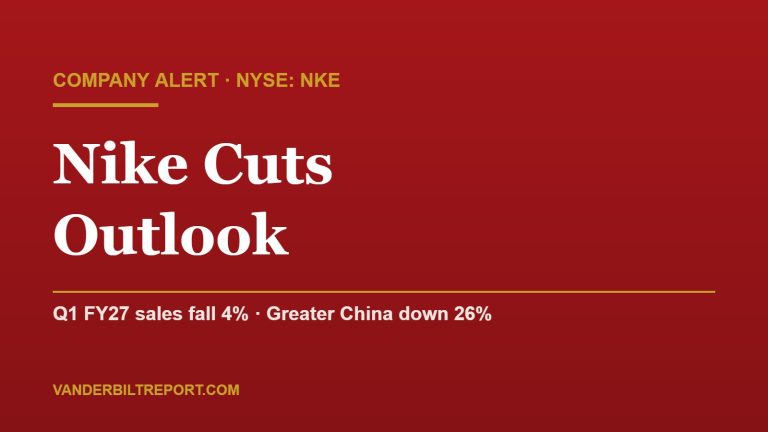
- Consumer: Nike (NYSE: NKE) fell more than 3% Friday on weaker guidance; PepsiCo, Constellation and Levi Strauss will offer more reads on consumer demand this week. Related: Nike Earnings: Q1 Sales Fall 4%.
- Housing and small caps: Both are sensitive to borrowing costs; small caps lagged in September.
- Health care: The only S&P 500 sector that did not finish higher Friday (Edward Jones).
Key Takeaways
- The 10-year Treasury yield near 5.3% is the dominant market variable this week.
- Hiring nearly stalled in September (+29,000), but yields did not fall meaningfully.
- Today’s ISM Services Prices Index, Wednesday’s Fed minutes and the 10- and 30-year auctions are the scheduled tests.
- Third-quarter earnings season begins in mid-October with the major banks, per Edward Jones.
Labeling note: Market levels, economic data and Fed actions above are verified facts from the linked sources. Statements marked “Analysis” and “What to watch” are Vanderbiltreport.com analysis, not forecasts or recommendations. Pre-market prices are developing information.
Sources
- Yahoo Finance — Stock market today, Oct. 5, 2026
- U.S. Bureau of Labor Statistics — Employment Situation, September 2026
- Federal Reserve — FOMC statement, Sept. 16, 2026
- Bloomberg via Yahoo Finance — Treasury 10-year yield hits highest since 2002
- Institute for Supply Management — August 2026 Services PMI
- Edward Jones — Daily market recap, Oct. 2, 2026
Publisher Disclaimer: Vanderbiltreport.com publishes news and information for general informational and educational purposes. Information is compiled from sources believed to be reliable, but Vanderbiltreport.com does not guarantee the accuracy, completeness, or timeliness of all information presented. Readers should independently verify information and conduct their own research before making financial, investment, business, or other decisions.