

Hepatitis B Birth Dose Vaccination Falls to 65.6% of U.S. Newborns, NEJM Evidence Study Finds

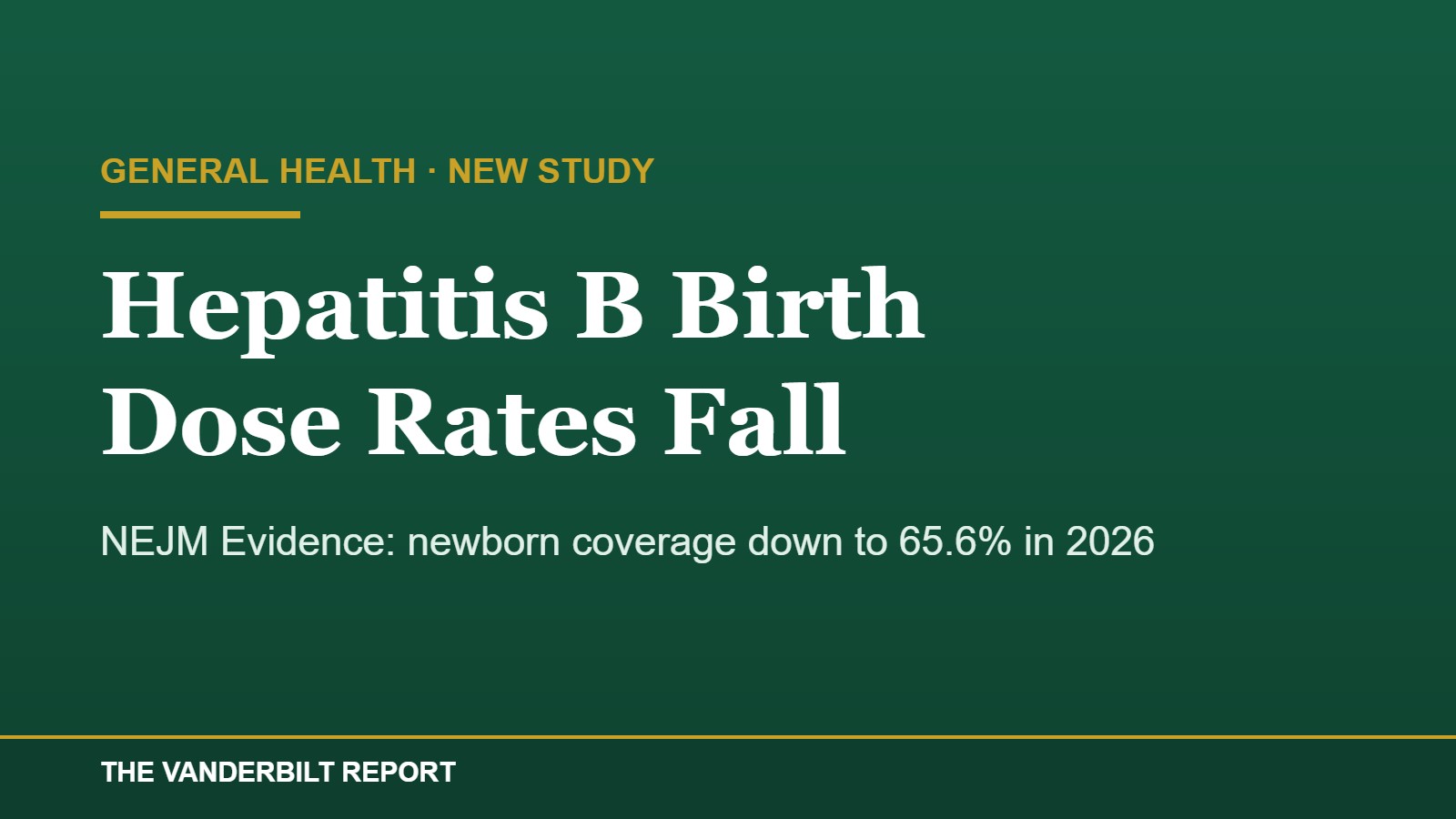
Fewer American newborns are getting the hepatitis B vaccine in their first day of life, according to a large new study. The analysis, published November 24, 2026, in NEJM Evidence, found that hepatitis B birth dose vaccination fell from about 80% of infants in 2022 to 65.6% in the first half of 2026 — and that the decline began years before federal advisers changed their recommendation.
Here is what the researchers found, how strong the evidence is, and what parents-to-be may want to discuss with their healthcare providers.
What the Hepatitis B Birth Dose Study Found
Verified findings — as reported by the study authors and HCPLive
Researchers at Truveta, a health data company, analyzed de-identified electronic health records for 1,338,961 infants born to 1,075,767 mothers in the U.S. between January 2018 and June 2026. They linked mother and infant records to track both prenatal hepatitis B screening and whether babies received the vaccine within one day of birth.
Birth-dose coverage by year
| Year | Infants vaccinated within 1 day of birth |
|---|---|
| 2018 | 76.4% |
| 2020 | 80.6% (peak) |
| 2022 | Near 80% |
| 2023 | 77.9% |
| 2024 | 75.4% |
| 2025 | 69.0% |
| 2026 (Jan.–June) | 65.6% |
Other key findings:
- Highest-risk babies: Among infants born to mothers who tested positive for hepatitis B, 97% to 98% received the birth dose each year from 2020 through 2025. That fell to 93.9% in the first half of 2026.
- Screening gaps: About 90.5% of pregnancies had a documented hepatitis B test. The share with no documented test improved over time, from 15.6% in 2018 to 7.6% in 2026.
- Undetected infections (estimate): Applying the study’s figures to roughly 3.6 million U.S. births a year, the authors estimate about 360,000 newborns could be born to mothers without documented screening — and more than 640 of them to mothers with an undetected hepatitis B infection. This is a projection, not a count, and assumes unscreened mothers have the same infection rate (about 0.18%) as screened mothers.
Why the Birth Dose Matters
Hepatitis B is a virus that infects the liver. Adults who catch it usually clear it, but babies are different. According to federal immunization guidance cited in the study coverage, about 90% of infants infected in their first year develop chronic hepatitis B, which can lead to liver scarring (cirrhosis) and liver cancer later in life.
U.S. guidance has long relied on two layers of protection:
- Screening every pregnant woman for hepatitis B at her first prenatal visit, as recommended by the U.S. Preventive Services Task Force.
- Vaccinating newborns shortly after birth. For babies of mothers known to be infected, the recommended approach is the vaccine plus hepatitis B immune globulin (HBIG) within 12 hours.
The universal birth dose was designed as a safety net for cases screening misses. In a statement, lead author Nina B. Masters, Ph.D., M.P.H., said the birth dose was meant to protect every newborn, including those whose mothers may not know they are infected, adding that “no screening system is perfect.”
The Policy Backdrop
Context — as described in the study’s press release and HCPLive
- December 2025: The CDC’s Advisory Committee on Immunization Practices (ACIP) voted to replace the universal birth-dose recommendation for infants of mothers who test negative with individual decision-making. Recommendations for infants of mothers who test positive or whose status is unknown were unchanged.
- January 2026: HHS issued a revised childhood immunization schedule.
- March 2026: A federal court temporarily blocked those changes, restoring the prior recommendations while litigation continues.
The study’s central finding is that the decline in birth-dose coverage started in 2023, nearly three years before the ACIP vote. The researchers did not examine why coverage fell, so the data cannot say how much any single factor contributed.
How Strong Is the Evidence?
Analysis
Strengths:
- Very large sample of more than 1.3 million infants across multiple U.S. health systems.
- Linked mother–infant records, allowing researchers to connect screening with vaccination.
- An 8.5-year window that shows the trend over time, not just a single snapshot.
- Consistent with a February 2026 JAMA research letter that also found declining birth-dose coverage using a different (30-day) measure.
Limitations noted in the coverage:
- Electronic health records may miss some vaccinations or tests, and participating health systems may not represent all U.S. births.
- 2026 data cover only six months.
- The study does not explain why vaccination declined, and it does not show whether hepatitis B infections in infants have increased.
- The estimate of 640-plus undetected maternal infections is a model-based projection.
- Truveta, which produced the study, is a data company; co-author Demetre Daskalakis, M.D., M.P.H., is a former director of the CDC’s National Center for Immunization and Respiratory Diseases. Daskalakis said more evidence is needed to guide policy decisions.
Practical Takeaways for Families
This article does not provide personal medical advice. Expectant parents should talk with their obstetrician, midwife or pediatrician about their own situation. Questions that may be worth raising include:
- Has my hepatitis B screening been done and documented? The study found that roughly 1 in 10 pregnancies over the study period had no recorded test.
- What is the hospital’s plan for my baby’s hepatitis B vaccine? Ask when the first dose is given and how it fits the full vaccine series.
- If I have hepatitis B, confirm that the delivery team knows and that the vaccine plus HBIG is planned within 12 hours of birth.
- Keep records of prenatal tests and your baby’s vaccinations to share with your pediatrician.
Reliable background information on hepatitis B and pregnancy is available from the Centers for Disease Control and Prevention.
Related Coverage on The Vanderbilt Report
- CDC Antimicrobial Resistance Report: Drug-Resistant Germs Cause About 51,000 U.S. Deaths a Year
- FDA Approves Hibsago: A New Chronic Hepatitis B Treatment Aims for a “Functional Cure”
- Vaxcyte VAX-31 Phase 3 Results: 31-Valent Pneumococcal Vaccine Meets All Primary Endpoints
Sources
- Masters NB, et al. “Hepatitis B Birth Dose Vaccination in the United States: January 2018–June 2026.” NEJM Evidence (Nov. 24, 2026)
- HCPLive — Hepatitis B Birth Dose Vaccination Falls to 65.6% in US Infants (Nov. 24, 2026)
- Truveta press release via GlobeNewswire (Nov. 24, 2026)
- CDC — Hepatitis B
This article is for general information only and is not medical advice. Please consult a qualified healthcare professional about vaccination and screening decisions.
Publisher Disclaimer: Vanderbiltreport.com publishes news and information for general informational and educational purposes. Information is compiled from sources believed to be reliable, but Vanderbiltreport.com does not guarantee the accuracy, completeness, or timeliness of all information presented. Readers should independently verify information and conduct their own research before making financial, investment, business, or other decisions.