
Binance Hack Latest: 98% of $6.3 Billion Replenished as Withdrawals Widen and T3 Shutdown Comes to Light

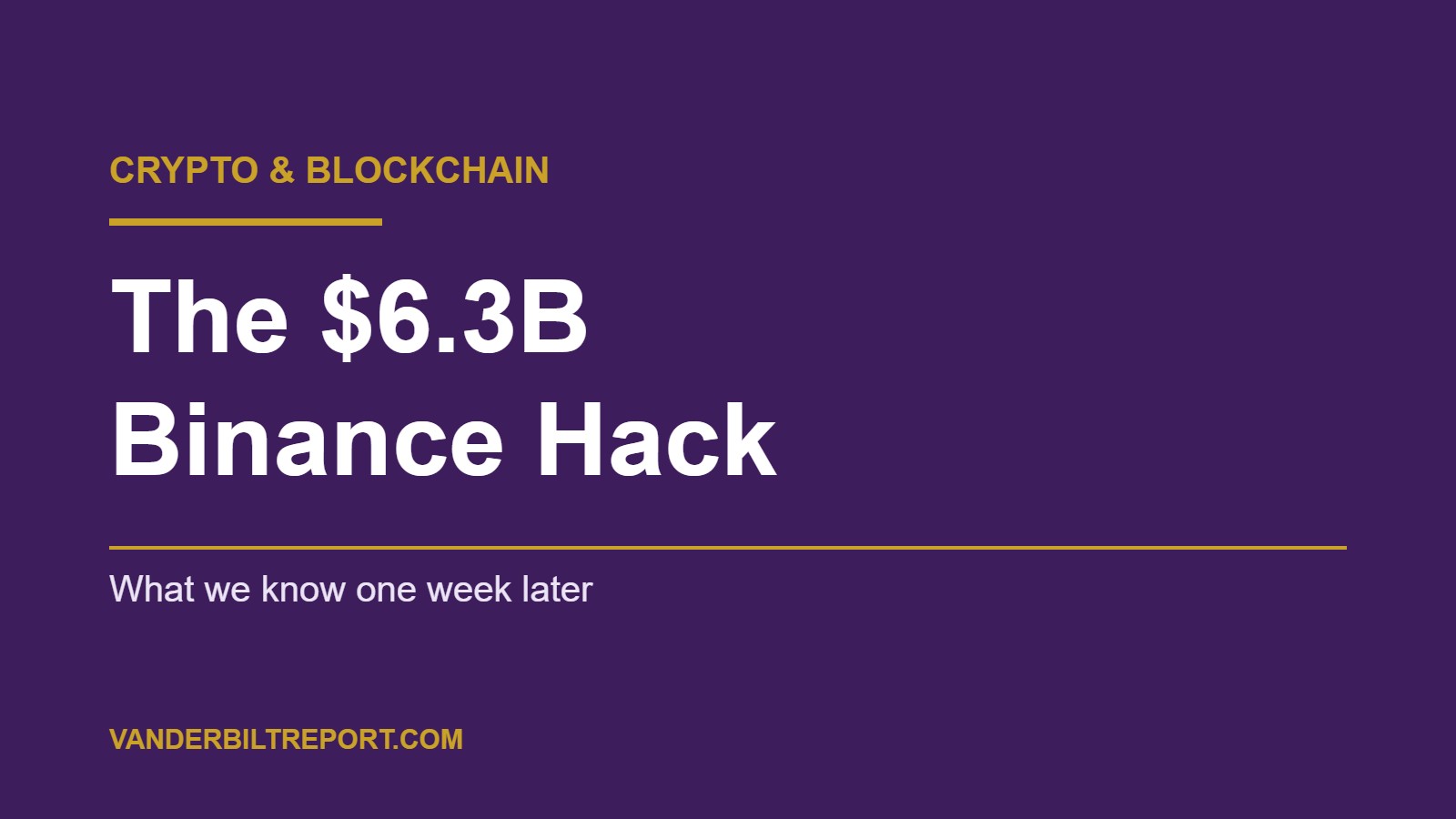
One week after the Binance hack drained about $6.3 billion in crypto from the exchange’s hot wallets, Binance says it has replenished roughly 98% of the stolen assets, is reopening withdrawals for dozens more tokens, and has published an expanded proof-of-reserves snapshot. Meanwhile, new reporting shows a major industry anti-crime alliance quietly shut down two months before the attack, and U.S. bank regulators have begun checking banks for any spillover.
Here is what is verified, what is still developing, and what comes next in what Binance and blockchain analysts describe as the largest crypto theft on record.
Binance Hack: What Happened
Verified facts (Binance official statements):
- According to Binance’s Security Incident Update #2, the exchange’s hot wallets were compromised at around 20:05 UTC on October 29, 2026, resulting in a loss of approximately $6.3 billion in token assets.
- Binance said it found no evidence that wallet private keys were leaked.
- Binance said it “will absorb the financial impact” of the theft and cover losses through its Secure Asset Fund for Users (SAFU) and corporate treasury. It reported setting aside more than $6.34 billion, including about $5 billion held in the exact affected tokens.
- The stolen assets were a mix of tokens, including BTC, ETH, XRP, SOL, BNB, USDT and USDC — not bitcoin alone.
How attackers got in (as described by Binance)
According to Bitcoin Magazine’s account of Binance’s incident report, the breach was the end of a months-long campaign targeting the company’s wallet engineers:
- June: A wallet DevOps engineer downloaded a tampered software installer.
- September: A second engineer was approached through a job platform and given a code repository containing a malicious component that opened a channel to an attacker server.
- October 20: Attackers used that foothold to reach more wallet engineers.
- October 29: Using a compromised signing service, attackers invoked Ethereum’s EIP-7702 feature to give an attacker-controlled contract partial control of hot wallets. Because the wallets used multi-party computation (MPC), suspending withdrawals did not immediately cut off this channel.
Who Is Behind It
- Law enforcement: The FBI attributed the attack to North Korea on October 31, identifying the group as TraderTraitor, according to The Coin Republic, which links the FBI alert.
- Blockchain analysts: Chainalysis and TRM Labs also linked the hack to TraderTraitor, Bitcoin Magazine reported. Chainalysis puts the total at about $6.4 billion.
- Denial: North Korea rejected the accusation through state media, according to Bitcoin Magazine, citing CNBC.
- Binance’s position: Binance cites the FBI finding but has not made its own attribution.
Frozen Funds and Recovery
| Item | Reported figure | Source |
|---|---|---|
| Total loss | ~$6.3B (Binance); ~$6.4B (Chainalysis) | Binance Update #2; Bitcoin Magazine |
| Frozen or intercepted on-chain | ~$2.85B–$3B | Binance updates, via Bitcoin Magazine |
| USDT frozen by Tether | More than $1.567B | Tether CEO Paolo Ardoino, via Bitcoin Magazine |
| USDC frozen by Circle | More than $800M | Circle CEO Jeremy Allaire, via Bitcoin Magazine |
| Stolen assets replenished by Binance | ~98% (as of Nov. 4) | Binance Update #7 |
Figures vary by source and date; some outlets report slightly different freeze totals.
Latest Binance Hack Updates (Nov. 4–5)
- 98% replenished: In Update #7, Binance said about 98% of the impacted amount has been replenished. It is buying the remaining 2% through market and OTC channels and said those purchases will be slower because the tokens are less liquid.
- Expanded proof of reserves: A new snapshot taken at 00:00 UTC on November 4 covers 44 tokens, up from 10. Binance said a full zero-knowledge proof would take about 50 to 60 hours to generate, after which users can check that balances are backed at least 1:1.
- More withdrawals: Update #8 said withdrawals for a list of additional tokens on Ethereum, BNB Smart Chain, Base, Tron, Polygon and Sui would begin reopening progressively from 04:00 UTC on November 5. Binance said not all listed assets would be available at once. Deposits remain open. Major networks, including BTC, ETH, SOL and XRP, reopened in phases from November 1.
- Outflows: Co-CEO Richard Teng said $10.97 billion was withdrawn in the 46 hours after withdrawals reopened, with net outflows of $5.28 billion, according to Bitcoin Magazine.
Developing: T3 Crime Unit Shut Down Before the Hack
On November 4, Bloomberg reported, as summarized by Bitcoin Magazine, that the T3 Financial Crime Unit — an anti-crime alliance formed in September 2024 by Tron, Tether and TRM Labs, which Binance later joined — was quietly terminated in late August, about two months before the hack. The shutdown was not publicly announced at the time.
- Company statements: A Tron DAO spokesperson said the program “has concluded” and that Tron will share a new initiative. Tether said it continues to work with TRM Labs. Binance declined to comment.
- Context: Reporting so far notes only the timing; no source has said the shutdown affected the response to the Binance hack.
Regulators Respond
- Bank checks: Federal Reserve and OCC supervisors began contacting U.S. banks on November 2 to ask about unusual activity or service disruption, Reuters reported via Bitcoin Magazine. Neither agency has issued new public guidance tied to the hack.
- Policy debate: CFTC Chairman Michael Selig said the hack supports the case for a federal registration path for offshore exchanges, according to Bitcoin Magazine.
- Binance statement: A Binance spokesperson said the company is in close contact with regulators worldwide.
Context for Newcomers: Hot Wallets, MPC and SAFU
- Hot wallet: An exchange wallet connected to the internet so it can process withdrawals quickly. Most exchanges keep the bulk of customer assets in offline “cold” storage.
- MPC (multi-party computation): A way of splitting signing authority across several parties so no single key can move funds. In this case, Binance says that design also meant no single key could quickly revoke the attacker’s delegation.
- EIP-7702: An Ethereum upgrade that lets a regular wallet temporarily run smart-contract code. Attackers abused it to gain partial control of Binance wallets.
- SAFU: Binance’s emergency insurance fund, created in 2018 to protect users in extreme events.
What Happens Next
- Binance has said it will publish a post-incident report and commission an independent review. No date has been announced.
- The full zero-knowledge proof of reserves is expected after the 50–60 hour generation window cited in Update #7.
- More token withdrawals will reopen progressively; users can check status on Binance’s withdrawal and network status pages.
- Investigators and stablecoin issuers continue to trace and freeze funds as attackers try to launder them.
Related Coverage on Vanderbiltreport.com
- MetaMask Staking Security Incident Forces Ethereum Validator Exits From Lido
- OCC GENIUS Act Final Rule: Federal Stablecoin Standards Set Ahead of January 2027
- DTCC Tokenization Service Goes Live
Sources
- Binance — Security Incident Update #2 (Oct. 30)
- Binance — Update #4: Withdrawals Resume in Phases (Nov. 1)
- Binance — Update #7: 98% Replenished, New PoR Snapshot (Nov. 4)
- Binance — Update #8: Withdrawals for More Assets (Nov. 5)
- Bitcoin Magazine — Binance incident report details
- Bitcoin Magazine — North Korea attribution, freezes
- Bitcoin Magazine — Tether and Tron scrapped T3 unit
- Bitcoin Magazine — Fed and OCC check banks
- The Coin Republic — FBI attribution and withdrawals
This article reports news and does not offer price predictions or investment recommendations.
Publisher Disclaimer: Vanderbiltreport.com publishes news and information for general informational and educational purposes. Information is compiled from sources believed to be reliable, but Vanderbiltreport.com does not guarantee the accuracy, completeness, or timeliness of all information presented. Readers should independently verify information and conduct their own research before making financial, investment, business, or other decisions.