


For the past several years, NextTrip, Inc. (NASDAQ: NTRP) has been executing a deliberate and methodical buildout. Acquisitions, technology integrations, distribution deals, new brands. From the outside, the scope of that assembly can be easy to underestimate.
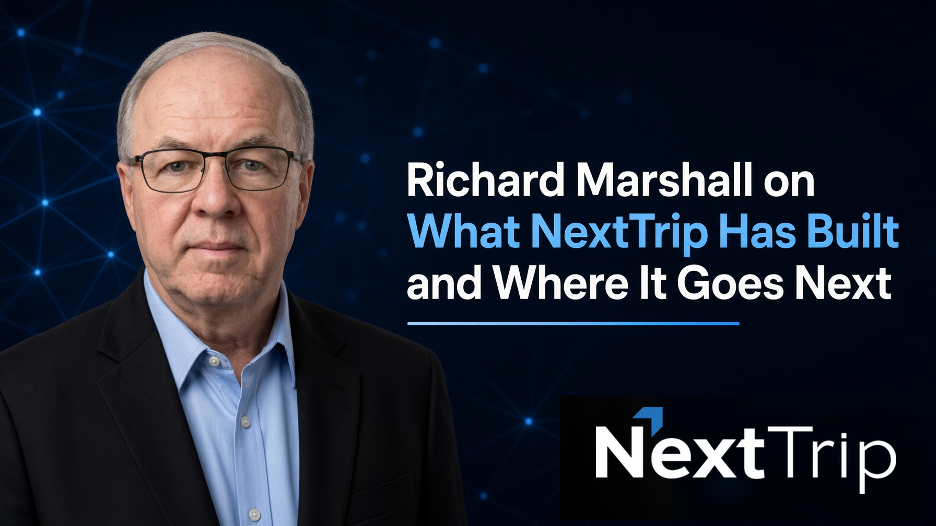
Richard Marshall, NextTrip’s Director of Corporate Development, has been close to every step of it. In a recent conversation, one theme came through clearly: the buildout phase is winding down, and the company is now firmly focused on usage, monetization, and operating results.
When we asked Marshall to characterize the shift, he put it plainly: “We’re spending more time on utilization, growth and monetization, and on getting the different parts of the business to support one another.”
For investors, that shift matters more than any single press release. Here is our deep dive into what NextTrip has built, why the strategy fits where travel demand is moving, and what you should watch to verify the story.
The Thesis: Travel Decisions Now Start With Content
NextTrip’s core argument rests on a change in traveler behavior. People increasingly discover destinations through streaming content, social feeds, and creators before they ever open a booking site.
The data supports this. Social media has become the most influential source of travel inspiration, ahead of official travel websites and review platforms. Among younger travelers, 79% of millennials and Gen Z say social recommendations heavily shape how they plan trips.
We asked Marshall directly how NextTrip positions itself around that shift.
“Travel media has always been good at inspiring people, and online travel companies have been good at taking bookings. We’re trying to connect those two experiences instead of treating them as separate parts of the journey.”
The company’s shorthand for this is a four-step funnel: Inspiration, Engagement, Transaction, Experience. JOURNY TV and related media properties handle inspiration. JOURNYGO handles engagement. The booking infrastructure, spanning luxury travel, cruises, groups, hotels, and dynamic packaging, handles the transaction and the trip itself.
What the Company Has Actually Assembled
NextTrip’s buildout over the past few years includes:
- Five Star Alliance, a luxury travel business
- Cruise and group travel capabilities
- JOURNY TV and the GoUSA TV media assets
- JOURNYGO, the content-to-commerce technology layer
- NextTrip Pro, a B2B platform for travel advisors
- YADA and NextTrip LIVE, focused on creator-led and experiential travel
The distribution footprint has grown alongside the asset base. JOURNY TV now reaches audiences through Samsung TV Plus, LG Channels, Roku, Plex, Apple, Android, Amazon Fire TV, YouTube, KC Global Media, and other partners. Per Marshall, that footprint spans approximately 80 countries, with hundreds of millions of minutes of content viewed annually across the platform and its partnerships.
When we asked Marshall about the reach numbers, he was precise in a way that signals operational discipline.
“We do need to be precise when we discuss the numbers. Distribution reach is not the same thing as measured viewers or minutes watched, but we’re now building a much clearer operating picture.”
That distinction matters. Reach figures are easy to publish. Measured engagement and monetization require a functioning platform and a clear reporting framework,and the fact that Marshall volunteered the distinction, rather than leaning on the larger number, reflects a management posture oriented toward accountability.
Content-to-Commerce: Where the Model Gets Interesting
The strategic center of the story is JOURNYGO, the layer designed to convert viewing into travel activity. We asked Marshall to walk us through how that works in practice. His example is simple: you watch a JOURNY TV program about the Bahamas, and instead of the relationship ending when the credits roll, JOURNYGO moves you into discovery, trip planning, and a bookable experience.
The company summarizes it as “Watch. Scan. Book. Go.”
“Do not just monetize the view. Monetize the intent created by the view.”
This aligns with a broader industry shift. As Skift reported in September 2026, the fight in travel’s creator economy has moved from attention to attribution for the booking. Content that inspires travel has existed for decades. The unresolved problem is connecting that inspiration to a transaction and proving the link.
Consumer behavior suggests the pathway is viable. Research shows 64% of travelers globally are comfortable booking trips directly through social media, and 53% feel fine booking expensive trips that way.
If viewers will book from a feed, booking from a streaming travel program is a short step. NextTrip’s advantage, in Marshall’s telling, is that it owns both ends of the chain: the media that creates intent and the travel infrastructure that fulfills it.
Four Growth Engines, One Platform
Marshall organizes the business into four connected growth engines:
- Core travel: Five Star Alliance, cruise, leisure, groups, and experiential travel
- Media: advertising, sponsorships, branded content, and destination partnerships around JOURNY TV
- B2B: NextTrip Pro, which puts the company’s technology, content, and booking capabilities in the hands of advisors and agencies
- Content-to-commerce and creator commerce: JOURNYGO, YADA, and NextTrip LIVE
The B2B piece deserves attention. NextTrip Pro consolidates the work an advisor juggles across several systems: client marketing, lead management, trip building, groups, bookings, and commissions. Advisors keep their own brands and client relationships.
For NextTrip, every advisor on the platform becomes another distribution point for its inventory and technology. Marshall’s summary: “Same infrastructure. More distribution.”
The creator side follows similar logic. YADA brings creator and audience relationships. NextTrip LIVE provides events and experiences. The Loaded Dice concert series serves as a live test of the model, with the Groups platform handling accommodations and logistics. If it works, the model repeats across artists, genres, and destinations.
One clarification for anyone reading the filings: despite the four-engine framing, the company’s formal reporting segments remain Travel and Media.
What Investors Commonly Miss
We asked Marshall what he thinks investors most commonly get wrong. He was candid.
“People can see a series of brands and announcements without seeing how they’re meant to fit together.”
His suggested lens: stop counting brands and look at the shared platform underneath them. The technology, content, travel inventory, customer relationships, and transaction capabilities are common. Each brand is a different channel drawing on the same infrastructure.
One part of the company creates the audience. Another creates the engagement. Another fulfills the travel. Demand enters from multiple directions and lands on one platform.
The Scoreboard: KPIs to Watch Over the Next Several Quarters
What stands out from our conversation is that Marshall did not wait for us to ask what success looks like, he defined it himself. He pointed to specific operating measures, and the willingness to name them publicly reflects confidence in the direction:
- JOURNY TV: audience size, minutes viewed, advertising inventory, and the revenue built around that audience
- Core travel: bookings and transaction activity across luxury, cruise, groups, and experiential travel
- NextTrip Pro: advisor adoption first, and over time, the bookings those advisors generate
- JOURNYGO: viewer engagement with the content-to-commerce experience, and whether that engagement turns into measurable travel activity
- YADA and NextTrip LIVE: whether creator and fan communities connect to group travel and bookable experiences in a repeatable way
Marshall’s own framing sets the bar: “Investors should increasingly be able to follow the business through operating measures such as minutes watched, advertising activity, advisor adoption, bookings, transactions and, ultimately, revenue.”
Companies rarely volunteer the metrics they expect to be measured by unless they believe the numbers will show progress. That Marshall offered this framework directly is itself a meaningful signal.
Our Take
The strategic logic is sound, and the platform NextTrip has assembled to act on it is real. Travel discovery has moved to content, consumers are ready to transact where they discover, and the industry’s open problem is connecting those two moments. NextTrip owns assets on both sides of that connection, media that creates intent and travel infrastructure that fulfills it. That combination is genuinely uncommon among small-cap travel companies, and it did not happen by accident.
What stands out is the coherence of the approach. Each component of the platform serves the others, media drives intent, technology converts it, and travel infrastructure fulfills it. That kind of integration is difficult to build and genuinely uncommon among small-cap travel companies. Marshall and his team have spent years laying the groundwork, and the platform they have assembled reflects that effort.
We asked Marshall where things stand heading into the next phase. His closing statement captures it.
“We’ve brought together travel, media, technology, B2B and creator capabilities, and we’re now working to make those pieces operate as one business. Our focus is execution: expanding distribution, growing audiences and transactions, and showing how that activity can translate into revenue and stronger operating performance.”
The pieces are on the board, and the team executing on them has the strategic clarity to make them move together. The next several quarters of operating data will give the market a clearer view of what Marshall and NextTrip have built.
We will keep tracking the filings and the numbers as they come in. Based on what Marshall has laid out, we expect the story to get clearer and more compelling from here.